









‘Warm and homely’: This Footscray icon is the ultimate introduction to Ethiopian food



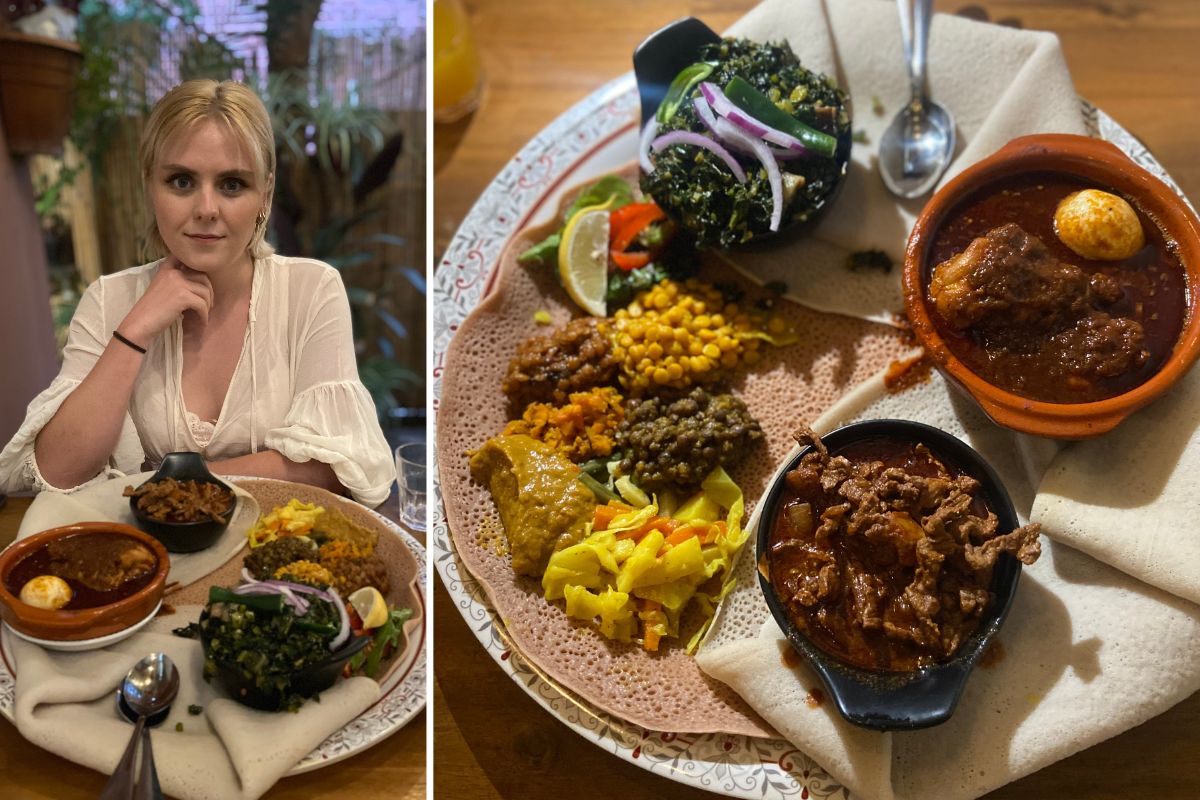
Press PLAY to hear Emilia’s full review
Ras Dashen
247 Barkly Street
Footscray
I thought I would welcome 2026 with a bit of ‘new year, new me’ energy, a challenge of sorts.
If you’ve not tried Ethiopian food before, Footscray is the place to start dipping your toe, thanks to the huge number of Ethiopian restaurants to choose from.
Footscray is Melbourne’s undisputed home of Ethiopian cuisine, and one of the names that always comes up first when you ask where to go is Ras Dashen.
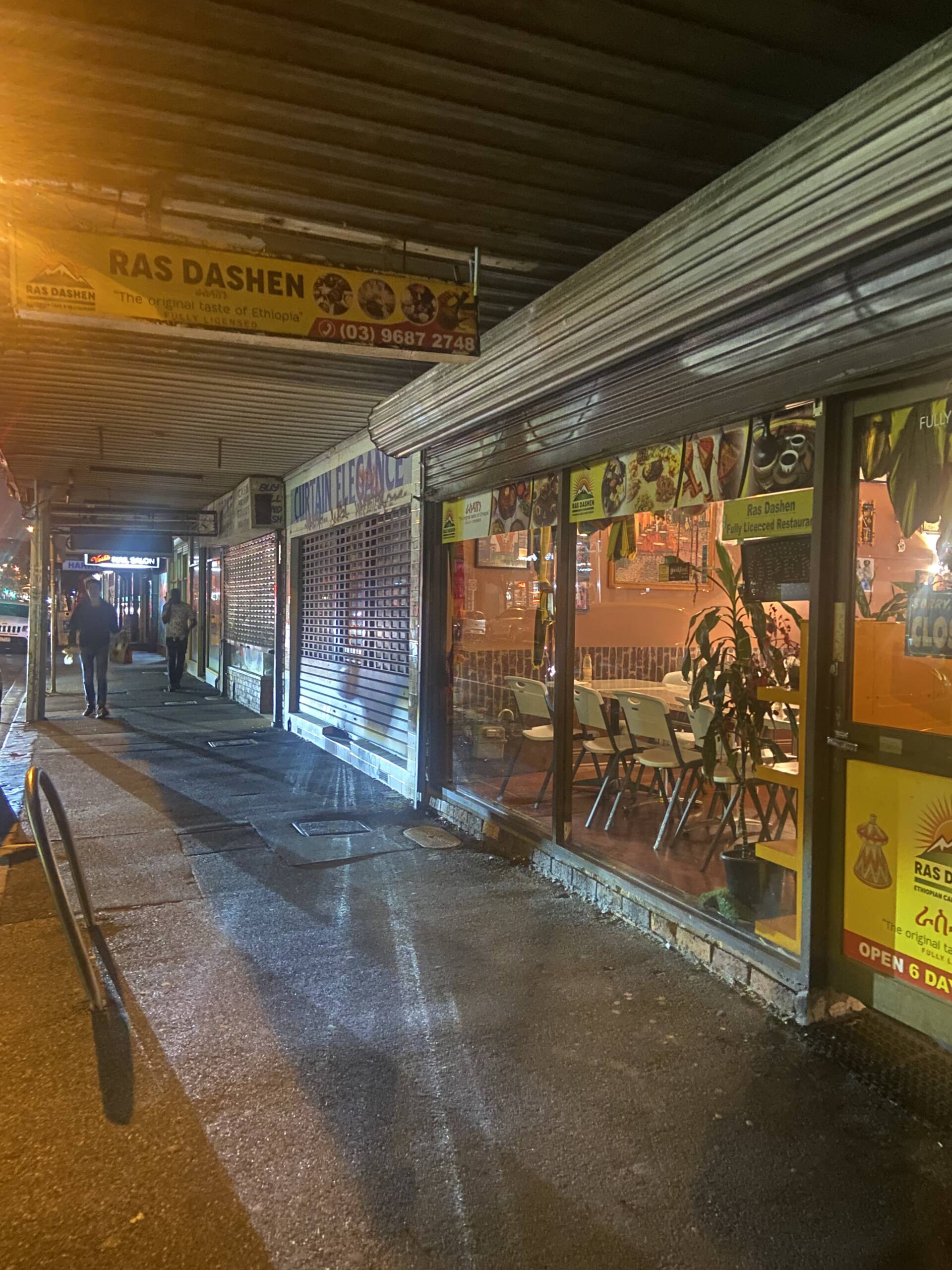
It’s been here for years and has become something of an institution.
Fun fact: the name Ras Dashen actually comes from the tallest mountain in Ethiopia, which feels fitting, because it’s a restaurant that stands tall among the rest.
When you walk in, you’re greeted by bright artworks, portraits, and woven straw baskets called mesobs sitting in each corner.
We walked through to the outdoor courtyard, which is equally as adorned and has more mesobs on every corner.
Traditionally, those are used to serve injera – the spongy, round flatbread that’s central to Ethiopian meals.
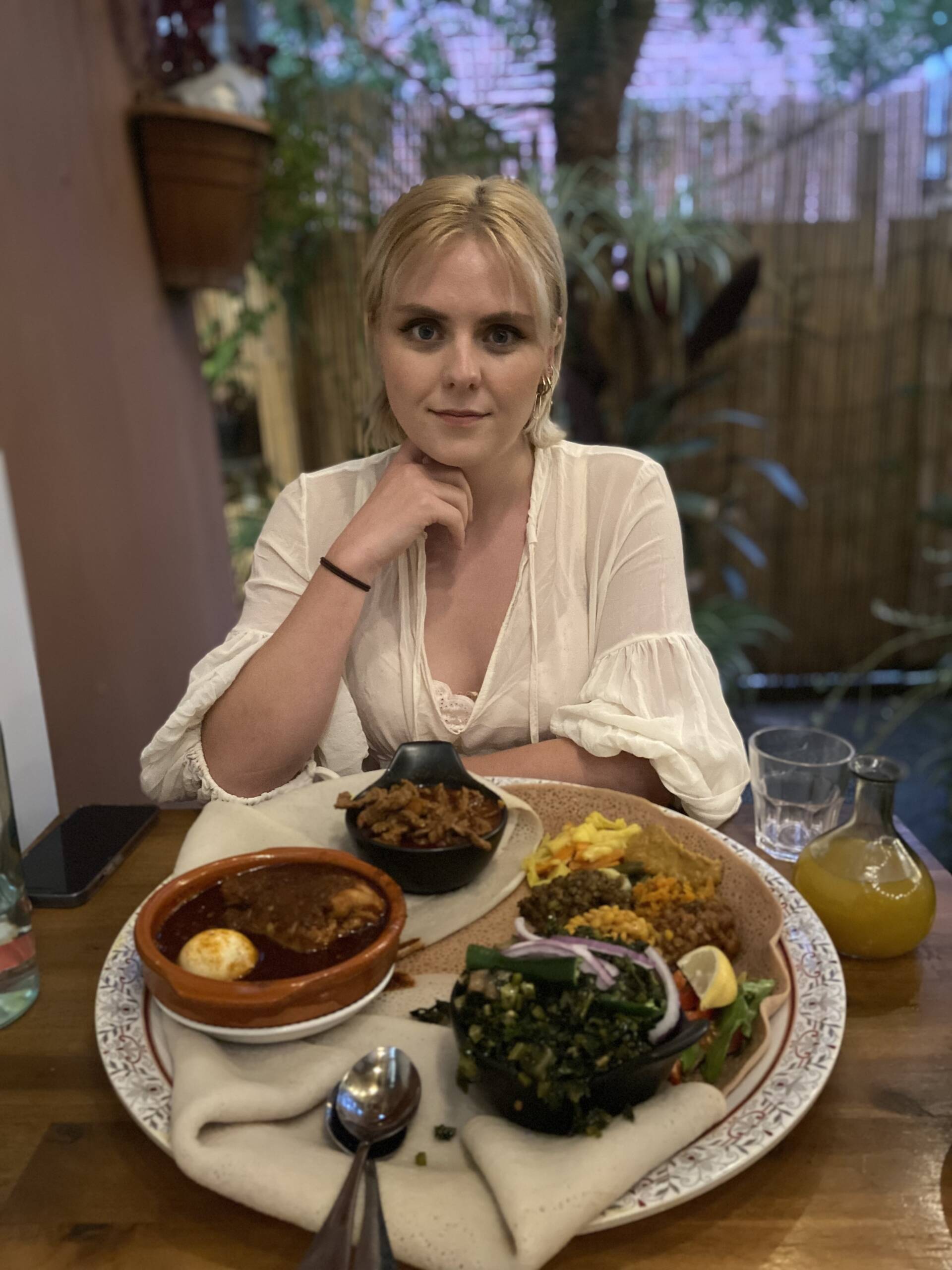
The atmosphere is warm and homely; it feels more like stepping into a family gathering than a restaurant.
And you kind of are…Ras Dashen is a true family‑run Footscray institution, owned by husband‑and‑wife team, who came to Australia as refugees and rebuilt their lives in Melbourne’s west.
They first opened the restaurant back in 2011 and, over more than a decade, it has grown into one of the key places that introduced many Melburnians to injera and Ethiopian food in general.
Alemitu cooks traditional recipes from her family, while Wondimu runs the floor with such warmth and energy that locals often call him “the happiest man in Footscray”.
So you’ll understand by now that Ethiopian food is all about sharing.
Everything comes out piled together on one big round of injera, the soft, stretchy bread made from fermented teff flour – a grain native to Ethiopia that tastes a bit like nutty buckwheat.
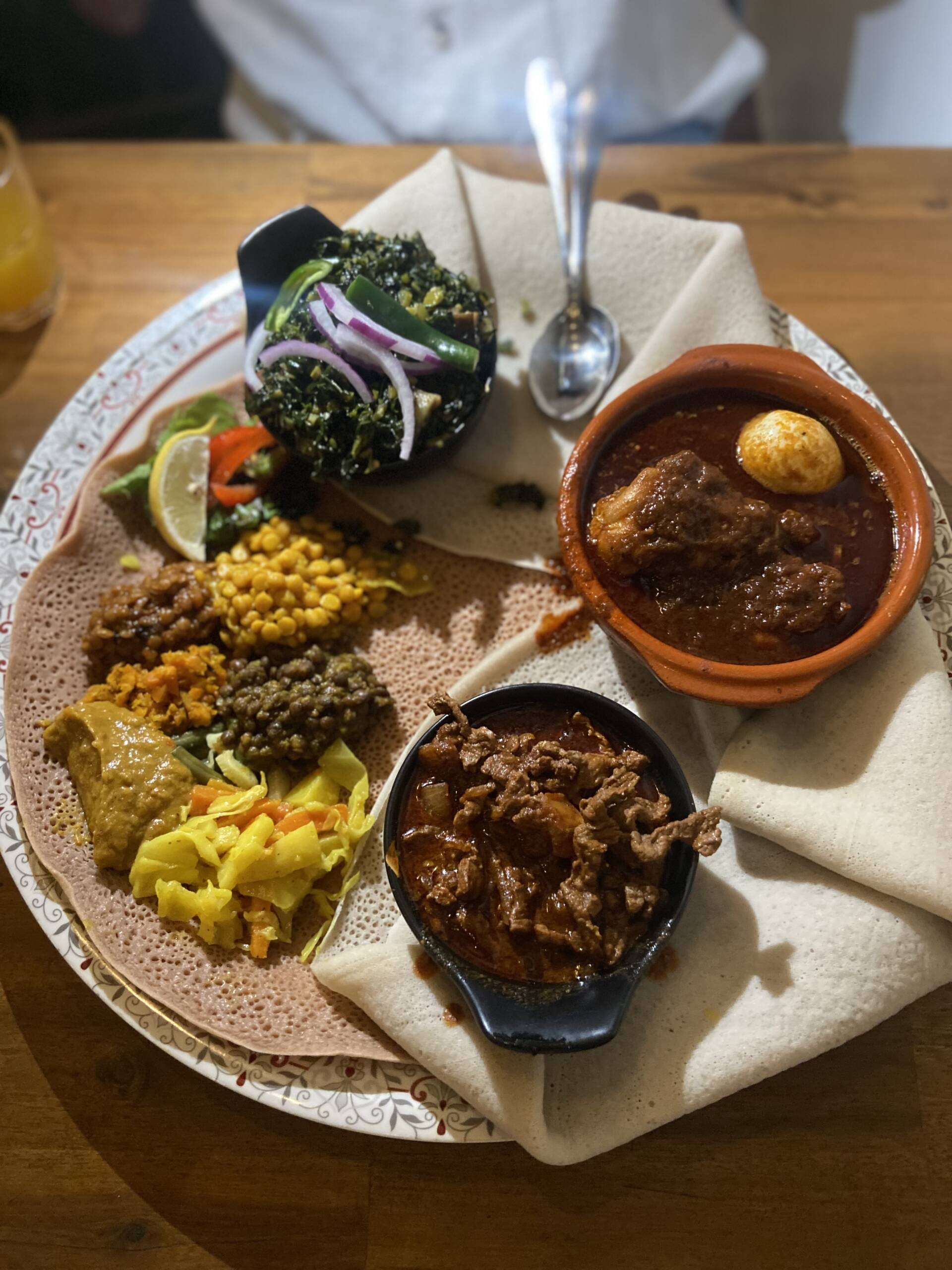
Injera has this wonderfully tangy flavour and spongy texture, and it doubles as both your plate and your cutlery.
You just tear off a piece, scoop up what you want, and eat with your hands. It’s not neat (I actually cut my nails before going), but that’s half the fun.
Now, the dishes themselves are full of slow, gentle spice.
Ethiopian cooking uses flavours like garlic, ginger, turmeric, chilli, and onion – but it’s not about heat; it’s about depth.
The main spice mix, called berbere, is like Ethiopia’s answer to garam masala: rich, red, and packed with warmth rather than fire.
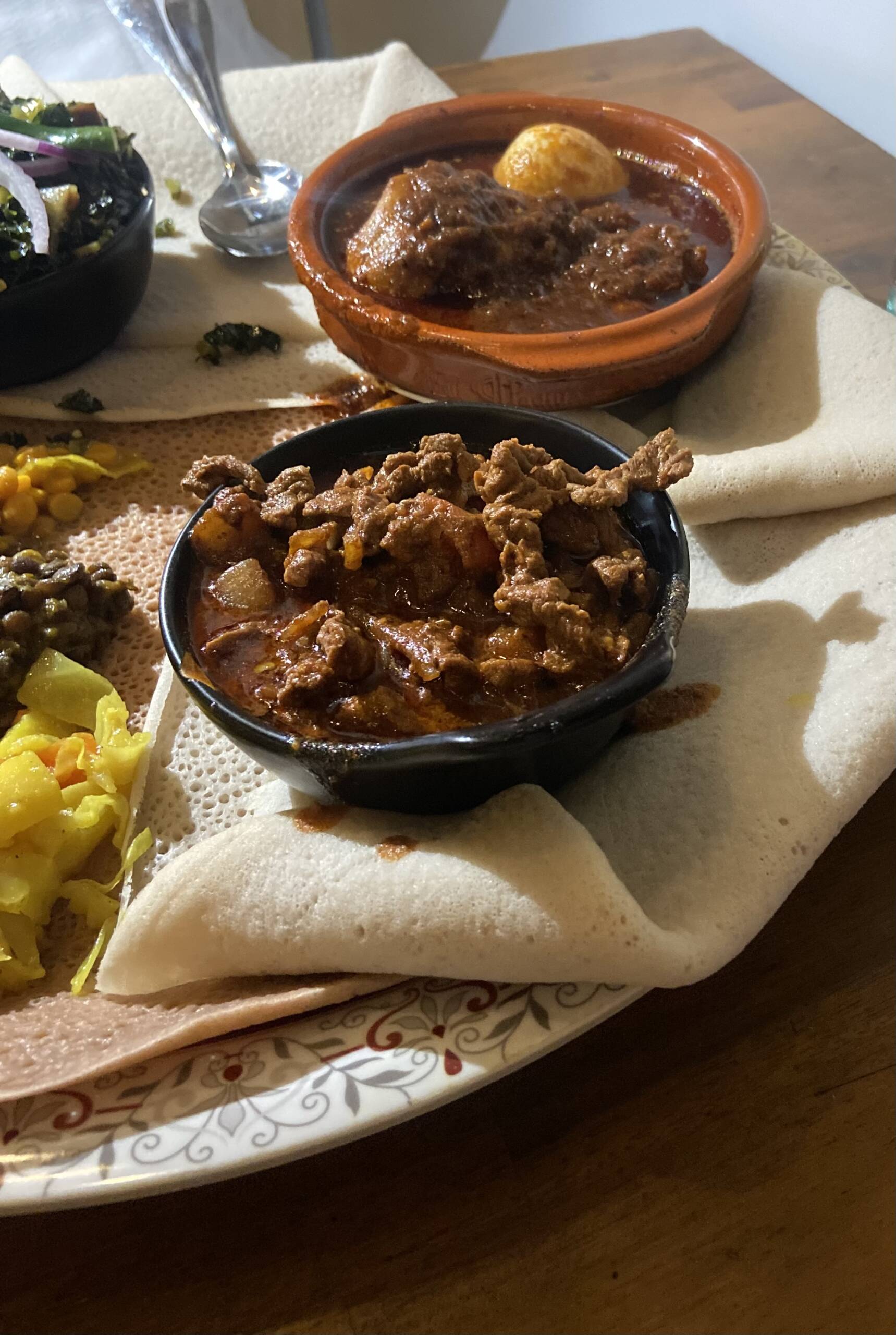
One of the dishes we tried was Alicha Wot, a golden stew made with beef.
It’s slow‑cooked until the meat almost melts, and it has that kind of sweet, deep, slow flavour that you only get from taking your time.
It tasted familiar – almost like a classic beef stew from home – just lighter on the salt and heavier on the spice.
That one ended up being my favourite of the night.
Then we had the Saucy Lamb Tibs.
Imagine bite‑sized chunks of lamb tossed in a pan with tomato, onion, garlic, and capsicum – sizzling hot, a little smoky, and just spicy enough to wake you up without overwhelming the meat.
It’s juicy and bright and feels a bit like an Ethiopian stir‑fry.
The most famous dish by far is Doro Wot, which is actually Ethiopia’s national dish. It’s made by simmering chicken for hours in that deep red berbere sauce until it’s rich, thick and aromatic.
They serve it with a boiled egg that’s been soaking in that sauce, so when you bite in, it’s packed with flavour.
For something a bit lighter, we also tried a Beyaynetu platter, which is the vegetarian option.
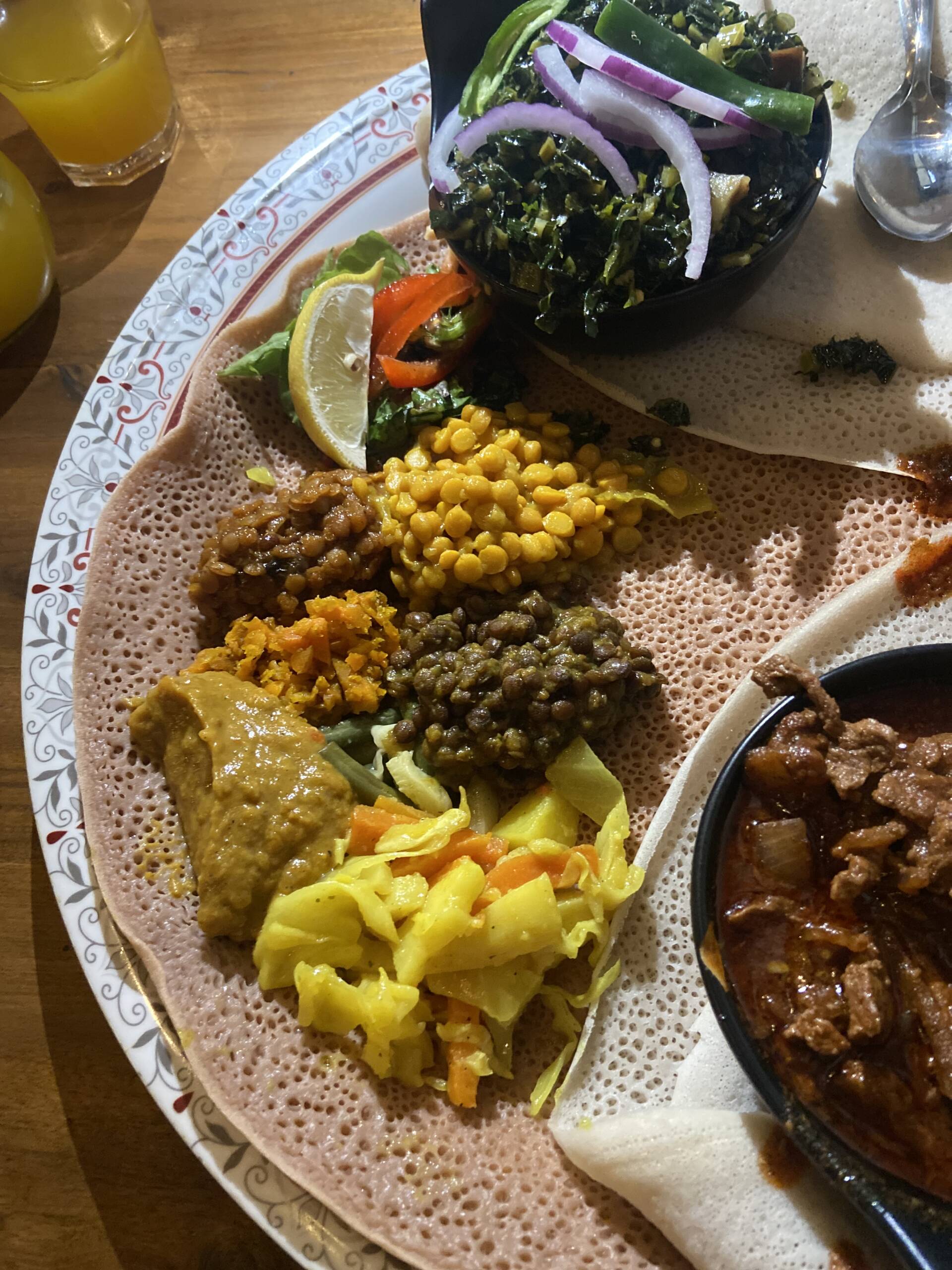
It’s beautiful to look at – a mix of lentils, chickpeas, split peas, sautéed greens, and salad, all neatly arranged on a round of injera like a painter’s palette.
It’s hearty, colourful, and lets you taste a bit of everything.
What I really liked about that one is how clean and comforting it felt, even though it’s 100 per cent plant‑based.
To balance everything out, the waiter suggested Gomen, which is braised collard greens – or silverbeet, which is what they use here.
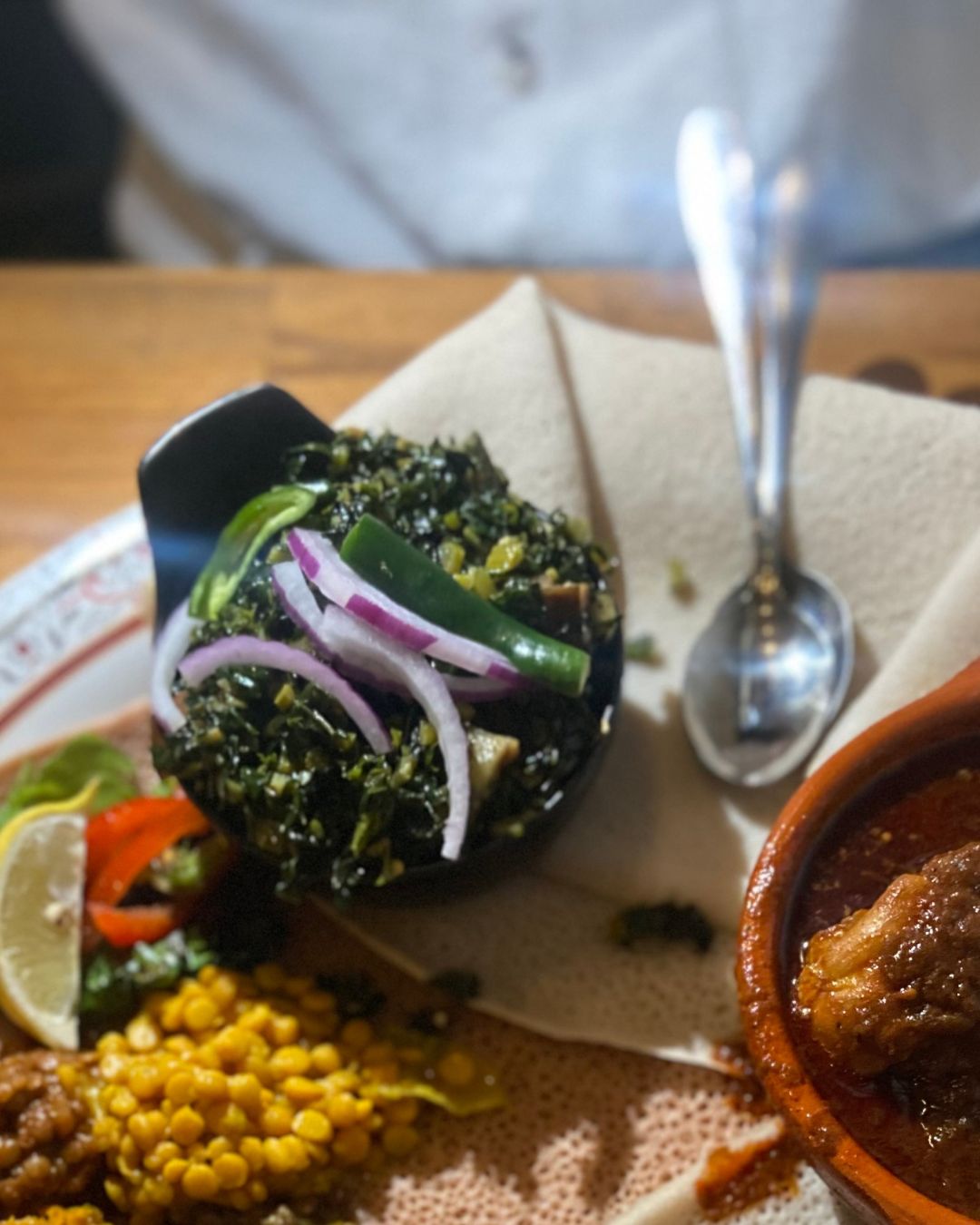
It’s cooked slowly with onion and garlic until it’s soft, mellow and almost creamy.
It gives you that nice, fresh contrast against all the big, rich stews.
As for drinks, the menu’s got local beer, cider and soft drinks, but if you quietly ask, there’s something special behind the counter – Ethiopian honey wine, called tej.
It’s not on the printed menu, but it’s absolutely worth finding.
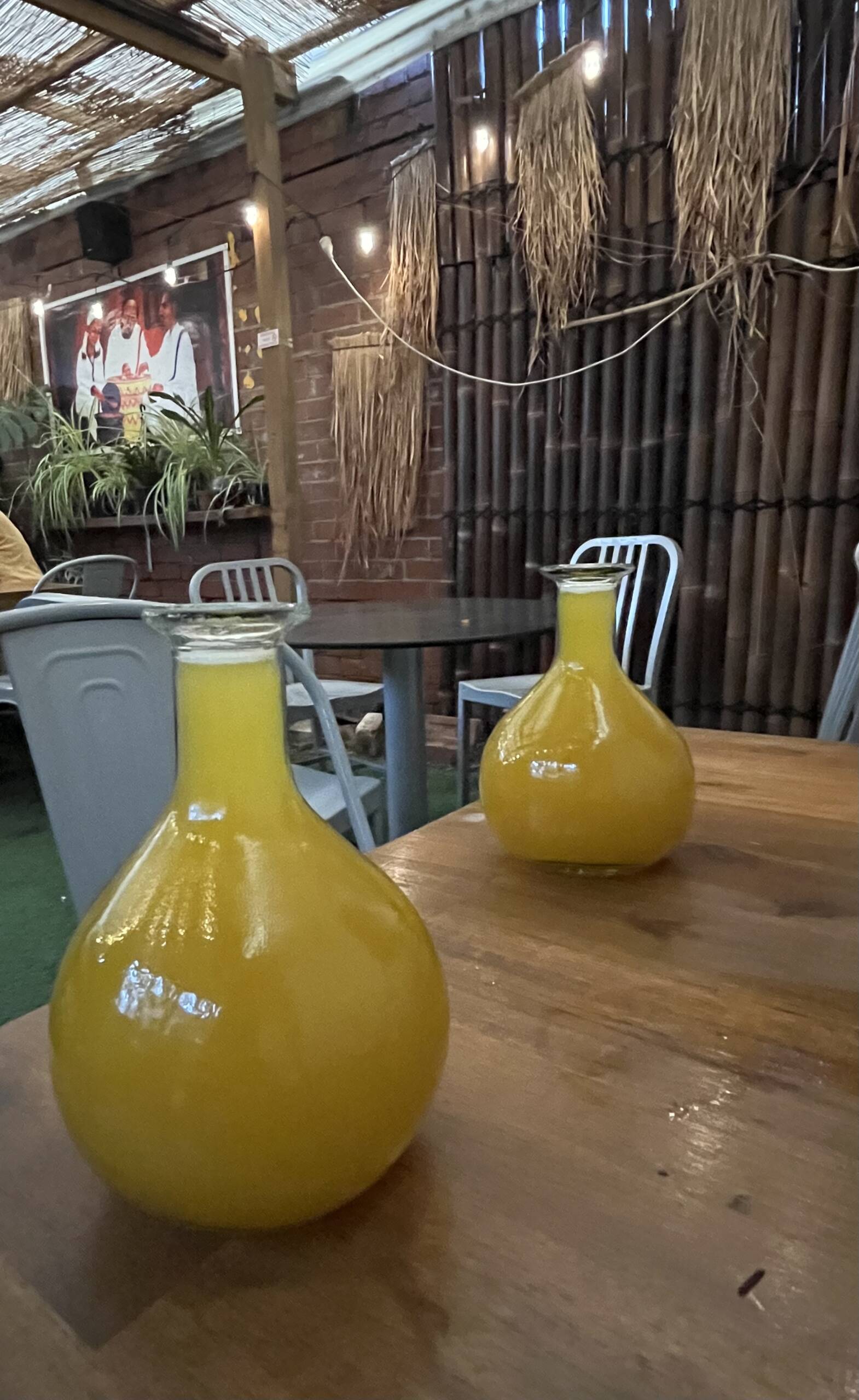
It’s floral and lightly sweet, with a bit of sourness at the end – a bit like if mead and kombucha had a baby.
I’ll be honest, one glass was enough for me, but it’s such a unique flavour and a great way to get the full traditional experience.
(Tej is made by fermenting honey with water and a special type of leaf called gesho, which works like hops in beer and gives it that balancing tang. It’s traditionally homemade, so every batch is a little different.)
And of course, Ethiopia is the birthplace of coffee, so if you want to finish properly, get one.
Once you get the hang of eating with injera, learning how to scoop without wearing your dinner, you realise Ethiopian food isn’t intimidating at all.
It’s warming, hearty and made to be shared.
If you’re the sort of person who loves the comfort of a stew or a roast, this will feel surprisingly familiar, just with a few different spices and a lot of heart.
So, if you want to do something a bit different this year, something that feels adventurous but still cosy, head to Ras Dashen in Footscray.
It’s a beautiful, under‑the‑radar spot that proves you don’t need to travel far to take your taste buds somewhere new.
Image: Supplied