










Emilia checks out a Peninsula winery highly recommended by 3AW’s Jacqui Felgate!



Press PLAY to hear Emilia Fuller’s full review
Avani Wines
98 Stanleys Road, Red Hill South
If you ever needed a reason to spend a slow afternoon in Red Hill, Avani Wines is it. Jacqui Felgate says this is her new favourite local after settling down there, and it was on her recommendation that I made the trip.
The 29-degree Sunday and proximity seven minutes from Merricks Beach and 13 to Safety Beach had nothing to do with my trip down the Peninsula.
Avani is among rolling vineyards and framed by eucalypts, there’s no rush here – and that’s very much the point.
Avani, which means Mother Earth in Sanskrit, has been part of the Peninsula story since 1998, when Shashi Singh and her husband Devendra planted their first vines. These days, Shashi runs the winemaking alongside her son Rohit, and you can feel that quiet generational rhythm in how the place operates.
Their philosophy is simple: healthy soil, hands‑on farming, and minimal interference. No chemicals, no shortcuts – just a deep respect for the land and whatever each season offers.
The team are warm, unhurried, and genuinely interested in what brought you there, interested in explaining their special slice of the world and interested in telling you about how thoughtful both their wines and their food are.
Given the perfect weather, we started with the Amrit Moscato & Gewürztraminer – an orange‑hued, skin‑contact wine, I would never normally go for anything Moscato-ish, I’ll admit, but the waitress assured me it was worth tasting. She was right.
The Chardonnay is next: bright, textural, with just enough of that cool‑climate precision to remind you how good Peninsular fruit can be. Then there’s the Syrah, this one a bit more expensive and for a reason, heavy-bodied, minerals and flavour of course.
Where Avani really surprises, though, is the food. The kitchen bridges Shashi’s Indian heritage with the local produce of Red Hill.
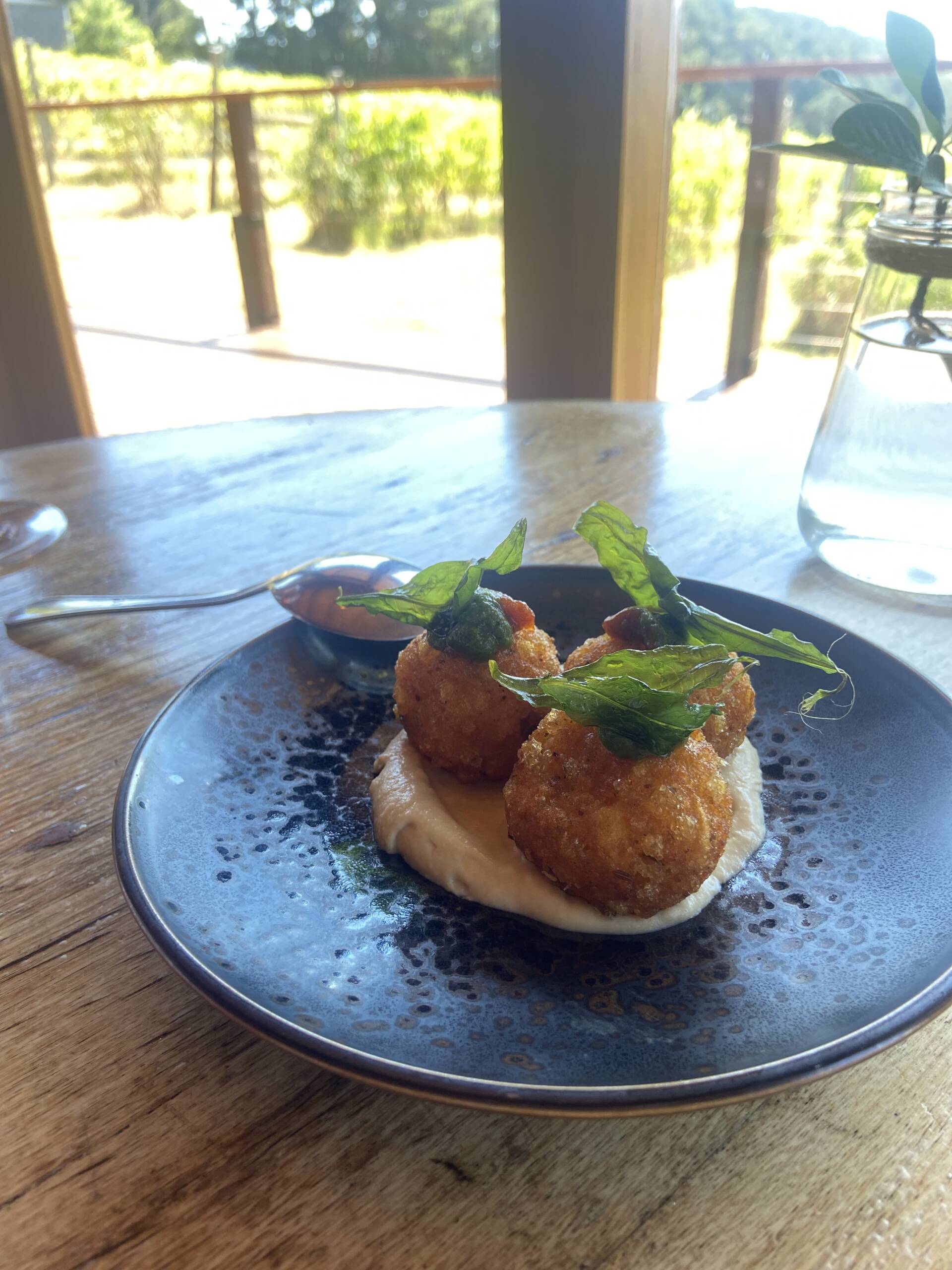
We started with sabudana ki tikki, which are little patties made from sabudana (tapioca pearls) and potato, shallow‑fried so they’re crisp on the outside and soft inside. They’re a classic North Indian snack often eaten during fasting periods, and here they arrive as golden, gently spiced spheres that you can happily eat with your fingers between sips of wine.
Next up was gilafi seekh kebab. “Seekh” refers to the skewer and “gilafi” means “coated” or “covered” in Hindi, so you’re talking about minced meat, usually lamb, wrapped around a skewer and often finished with a fine coating of peppers or spices.
These came smoky and tender on a bed of fermented mustard and coconut yoghurt, which brought in that sharp, tangy, coastal note.
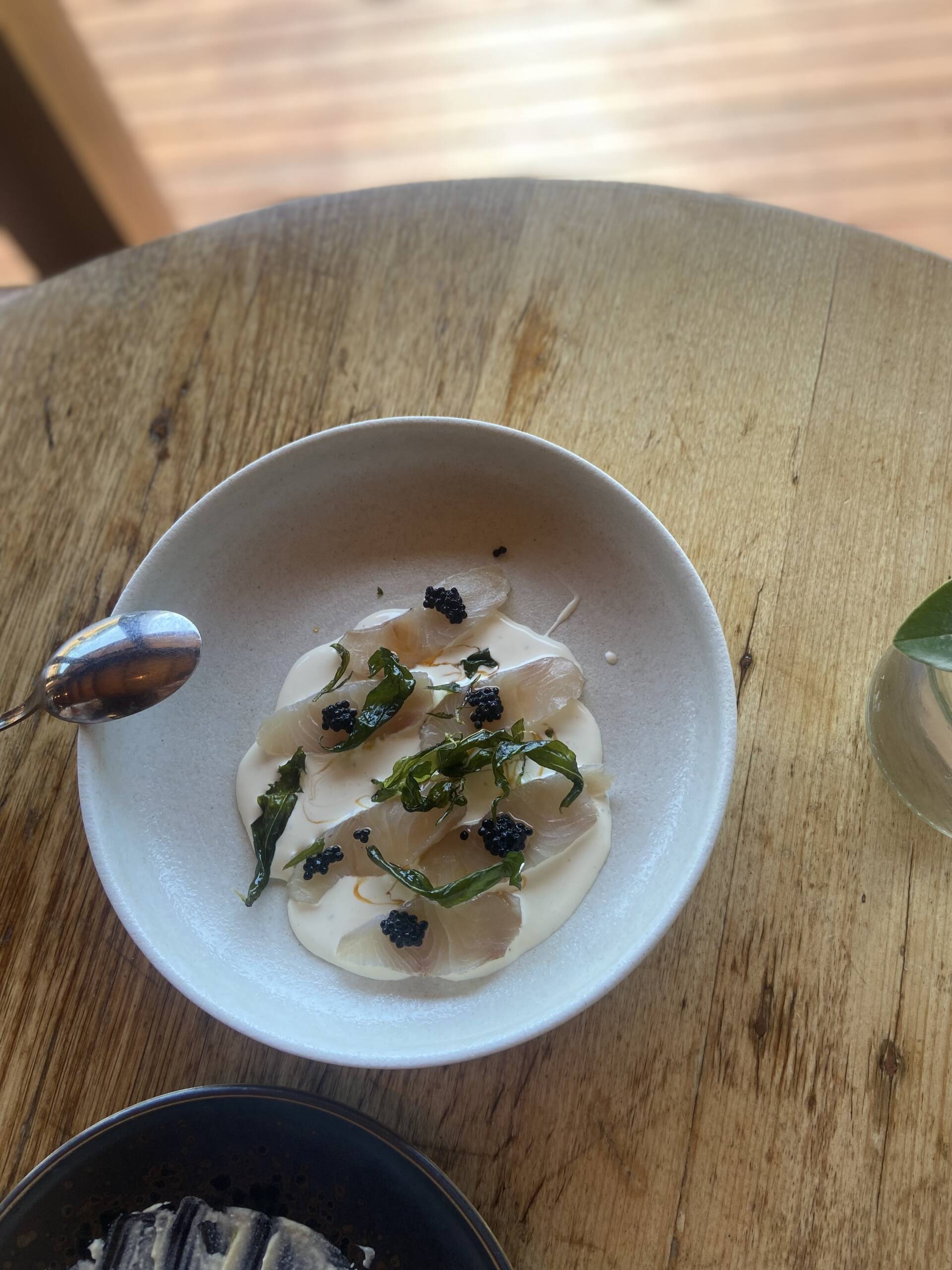
The spice and citrus-cured hiramasa kingfish leaned more modern Australian, but with Indian touches layered in. Thick slices of local kingfish were cured so they stayed silky but picked up a bright, almost ceviche‑like lift from the citrus and spices.
There was crème fraîche as the base for richness, little bursts of caviar, a drizzle of chilli honey from the Peninsula and a crisp curry leaf. It was the kind of dish where every bite gives you sweet, sour, salty and heat all at once, and the Chardonnay snapped everything into focus.
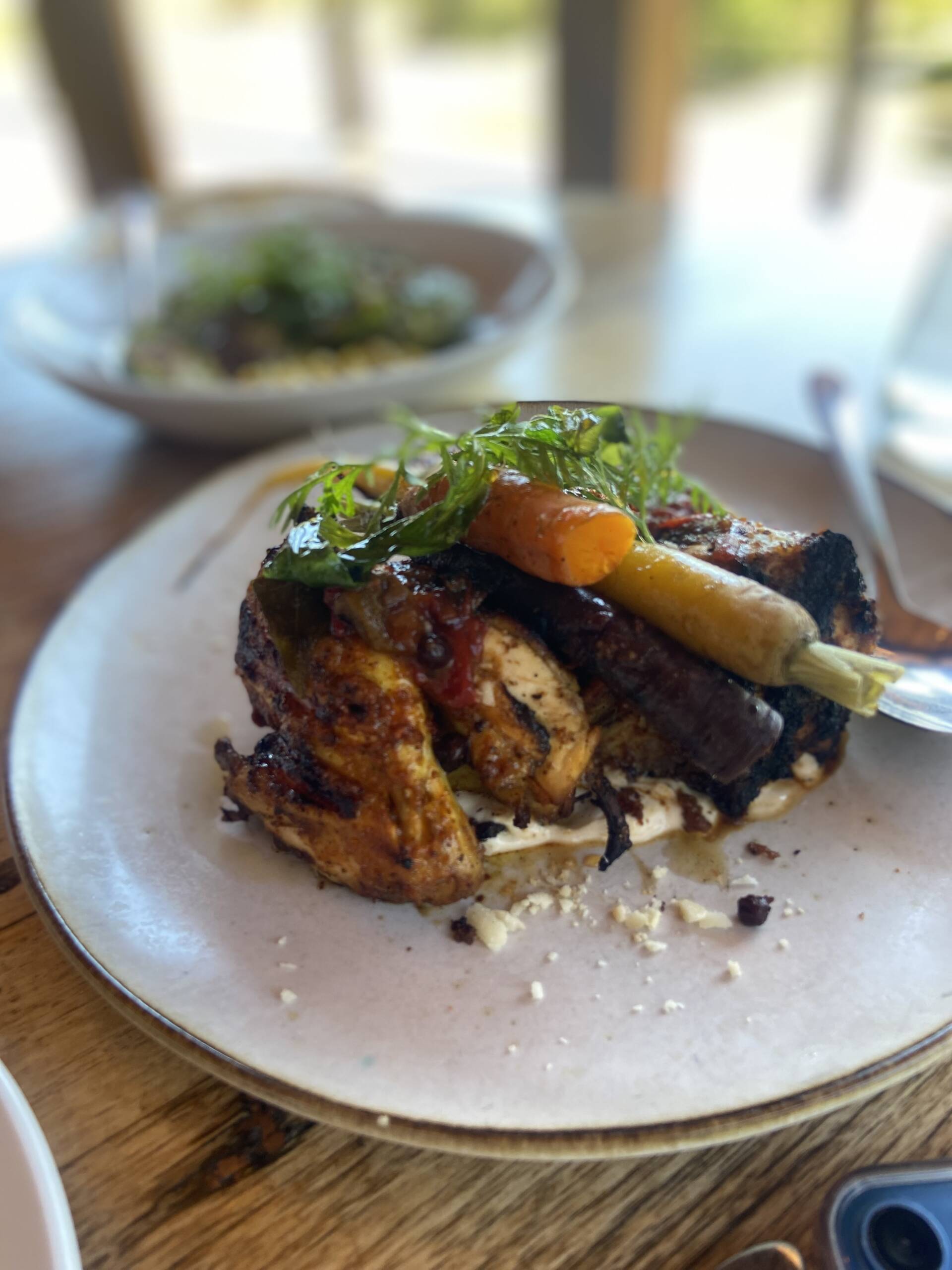
For mains, the tandoori marinated spring chicken was the star. The chicken is twice-cooked, so you get a deep char on the outside, but the meat stays juicy and fragrant right to the bone.
The slow-cooked lamb shoulder felt like a comfort dish that could sit on any Australian table, but the seasoning leaned into warm spices you’d expect from northern and central Indian cooking.
Long, gentle cooking left it falling apart with just a nudge of a fork. On the side, crisp potato tuk (normally plantain but on the day I went, potato) arrived as chunky, fried pieces, a nod to the way starchy vegetables are treated in many Indian regional cuisines, especially in the west where “tuk” often means twice‑cooked until crisp. Salty, crunchy and impossible to stop picking at.
A smashed cucumber salad brought in that cool, refreshing note you often find alongside richer dishes in both Indian and East Asian meals, all crunch, herbs and light dressing to reset your palate.
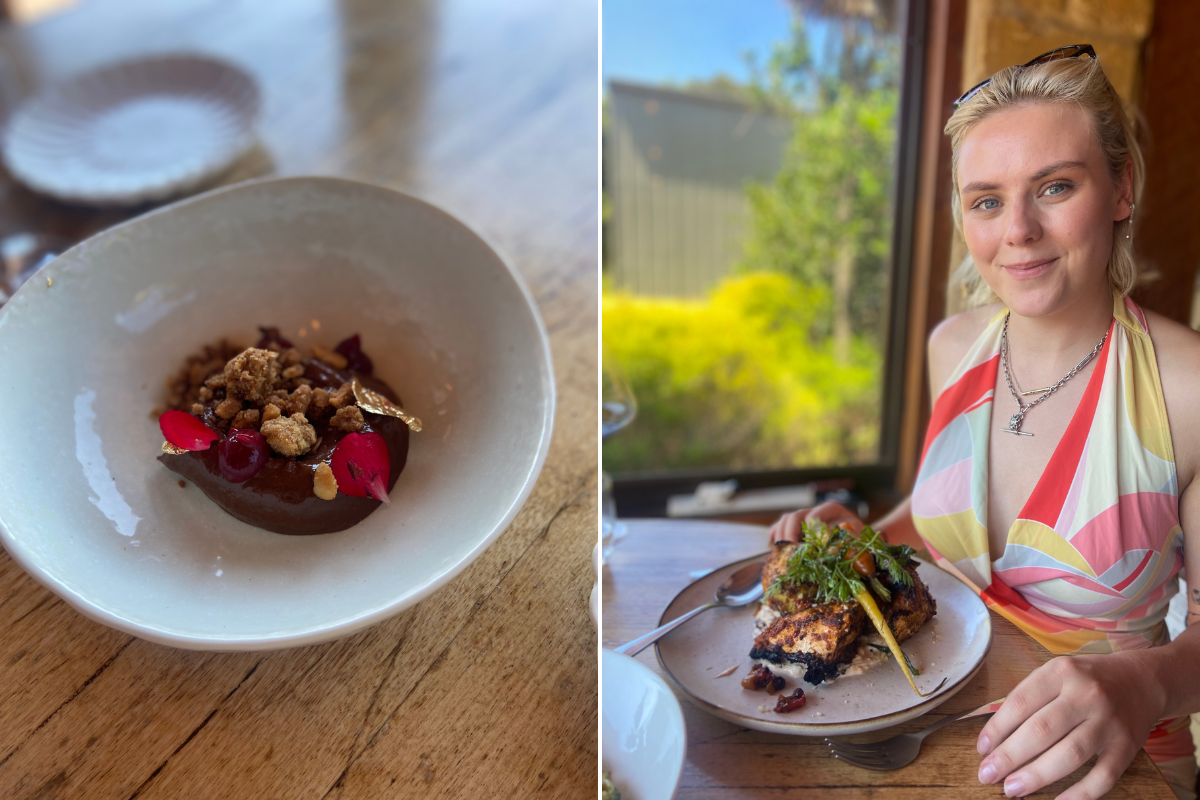
We finished with chocolate mousse, which needed no translation at all. Dark, silky and just sweet enough, it was the familiar comfort dessert that still felt on theme when you took a small spoonful with the last sips of Syrah. Topped with macadamia crumb and gold leaf for the extra luxury.
Avani isn’t trying to be showy or chase trends. It’s a family‑run winery that knows exactly what it is: a place where the land, the wine and the food are all in quiet conversation with each other.
You taste the cool‑climate vineyards, you feel the Indian influences, and you leave with the sense that everything here is anchored in that Mother Earth philosophy.
It’s absolutely worth the drive. Go on a clear day, take your time, and let the afternoon stretch out a little longer than you planned.
Images: Supplied